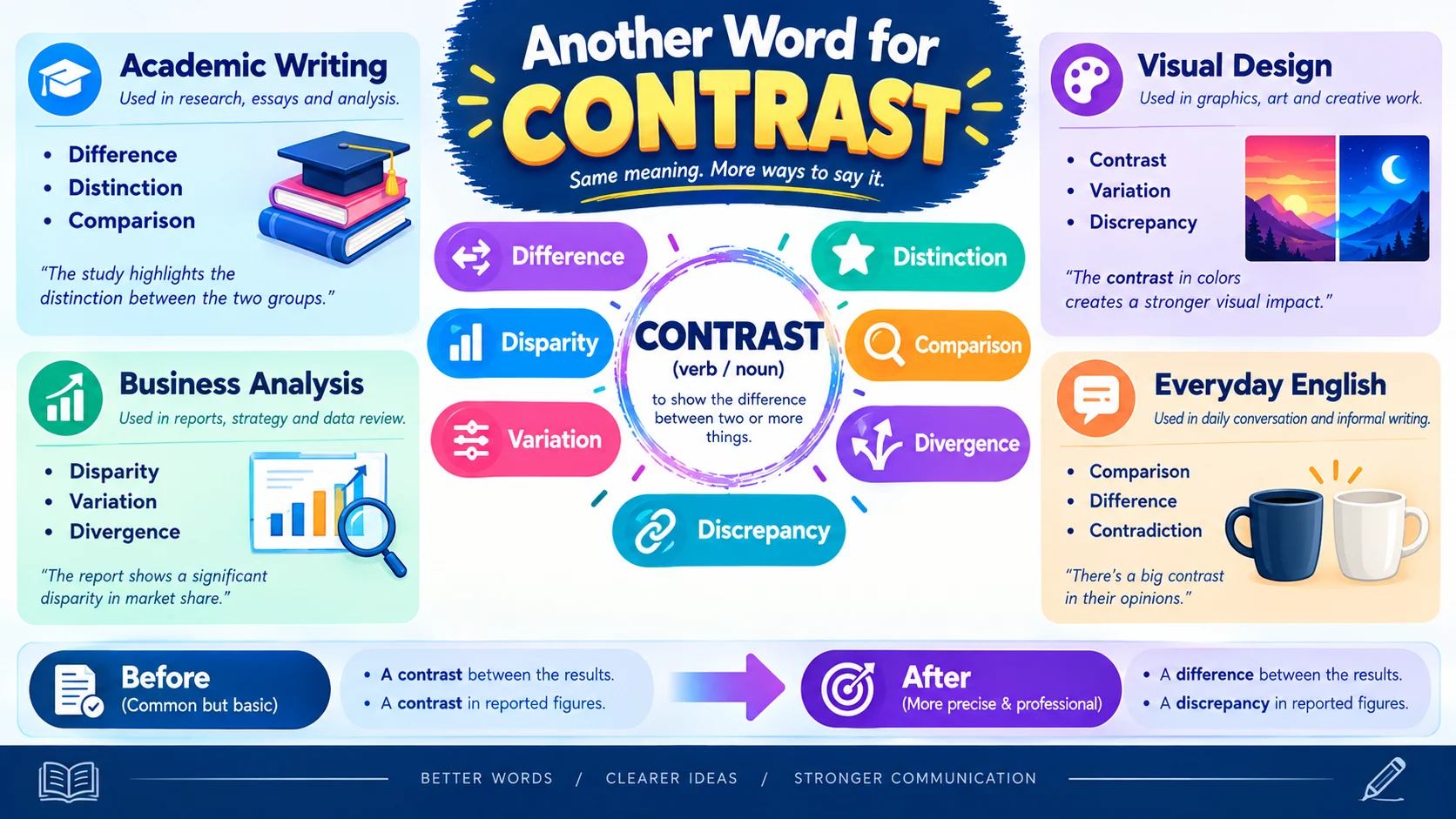
Another word for examine depends on the context. Common synonyms include inspect, analyze, assess, investigate, review, study, evaluate, and scrutinize. Use inspect to check something closely, analyze to understand its parts, evaluate to judge its quality, and investigate to uncover facts. Choosing the right alternative makes your writing more precise and natural.
What Does Examine Mean?
Definition
The word examine is a verb that means to look at something carefully, study it in detail, or investigate it to understand its condition, meaning, or significance. It can also mean testing someone’s knowledge or checking a person for medical reasons.
For example:
- The engineer will examine the machine for defects.
- Researchers examine the relationship between sleep and memory.
- The doctor will examine the patient.
- The teacher will examine students on the material they studied.
Although these examples use the same verb, each has a slightly different purpose. A machine may need inspection, research data may need analysis, and a patient may need a medical evaluation.
Common Uses
The word examine commonly appears in five contexts:
- Inspection: Checking an object, document, or system for problems.
- Research: Studying information, evidence, or a question in detail.
- Evaluation: Judging the quality, value, or effectiveness of something.
- Medical assessment: Checking a person’s health or symptoms.
- Testing: Assessing someone’s knowledge or understanding.
Understanding the intended action helps you choose the most appropriate synonym.
Best Synonyms for Examine
| Synonym | Meaning | Best Used When | Example |
|---|---|---|---|
| Inspect | Look closely for problems or defects | Equipment, buildings, and documents | The technician inspected the machine. |
| Analyze | Study parts or details to understand something | Data, research, and complex problems | Researchers analyzed the survey results. |
| Assess | Judge a condition, situation, or need | Risks, performance, and progress | The manager assessed the team’s performance. |
| Investigate | Search for facts or causes | Incidents, complaints, and research questions | Police investigated the incident. |
| Review | Look over something to check or understand it | Reports, documents, and plans | The editor reviewed the manuscript. |
| Study | Examine something to learn about it | Subjects, behavior, and evidence | Students studied the historical records. |
| Evaluate | Determine quality, value, or effectiveness | Programs, performance, and proposals | The committee evaluated the proposal. |
| Scrutinize | Examine with very close attention | Claims, evidence, and financial records | Auditors scrutinized the accounts. |
| Explore | Investigate a subject or possibility | Ideas, topics, and opportunities | The article explores the causes of inflation. |
| Probe | Investigate deeply to uncover information | Complex issues and hidden causes | Reporters probed the allegations. |
| Test | Check whether something works or meets a standard | Products, systems, and knowledge | Engineers tested the new software. |
| Audit | Conduct a systematic examination of records or processes | Finances, compliance, and operations | The firm audited its annual accounts. |
| Consider | Think carefully about something | Options, arguments, and decisions | The board considered every proposal. |
| Survey | Examine or gather information about a group or area | Public opinion, land, and research | Researchers surveyed local residents. |
| Diagnose | Identify the nature or cause of a problem | Medical conditions and technical faults | The mechanic diagnosed the engine problem. |
Synonyms by Context
Formal Writing
In formal writing, analyze, evaluate, assess, investigate, and scrutinize are useful alternatives.
Analyze works when the goal is to understand how something functions or how its parts relate.
Example: The report analyzes the factors contributing to economic growth.
Evaluate emphasizes judging quality, effectiveness, or value.
Example: The committee evaluated the effectiveness of the proposed policy.
Scrutinize suggests a particularly close and critical examination.
Example: The researchers scrutinized the evidence before reaching a conclusion.
Choose the verb that describes the actual method of examination rather than simply selecting the most sophisticated-sounding word.
Professional Writing
For business communication, useful alternatives include review, assess, inspect, audit, and evaluate.
Review is appropriate for checking documents, plans, and proposals.
Business example: The manager reviewed the quarterly performance report.
Assess works when determining a situation’s condition, risks, or needs.
Business example: The team assessed the risks associated with the new project.
Audit is more specific. It refers to a systematic examination of financial records, controls, or compliance with requirements.
Business example: The company audited its financial statements.
For a resume, use precise action verbs such as analyzed sales data, evaluated project outcomes, or inspected equipment when those actions accurately describe your experience.
Academic Writing
Academic writing often uses analyze, investigate, study, assess, and explore.
Analyze is useful when interpreting data, arguments, texts, or research findings.
Academic example: The study analyzes the relationship between screen time and sleep quality.
Investigate emphasizes seeking answers to a research question.
Academic example: Researchers investigated the effects of air pollution on plant growth.
Explore works when examining a topic or possibility without necessarily reaching a definitive conclusion.
Academic example: The paper explores alternative approaches to renewable energy.
If you are discussing a literary text, interpret may be more suitable when your goal is to explain its meaning.
Daily Conversation
In everyday English, check, look at, review, study, and test are often natural alternatives.
Examples:
- Instead of “Examine the door,” say “Check the door.”
- Instead of “Examine this document,” say “Look over this document.”
- Instead of “Examine the instructions,” say “Read through the instructions.”
- Instead of “Examine whether the device works,” say “Test whether the device works.”
Simple words often communicate the action more clearly, particularly in casual conversations and instructions.
Professional Alternatives for Examine
The best professional alternative depends on what you are checking and why.
Analyze
Meaning: Study information or the parts of something to understand patterns, relationships, or causes.
Best Used For: Data, business performance, research, and complex problems.
Tone: Professional and analytical
Difficulty: Medium
Usage Frequency: Very Common
Best For: Resume, Essay Writing, Academic Writing, Business Writing, Marketing Copy
- Business example: Analyzed customer feedback to identify service improvements.
- Academic example: The researchers analyzed the collected data to identify significant patterns.
- Daily conversation example: Let’s analyze what went wrong.
Evaluate
Meaning: Judge the quality, effectiveness, value, or importance of something.
Best Used For: Performance reviews, proposals, programs, and decisions.
Tone: Professional and formal
Difficulty: Medium
Usage Frequency: Very Common
Best For: Resume, Email Writing, Essay Writing, Business Writing
- Business example: Evaluated vendor performance before renewing contracts.
- Academic example: The study evaluated the effectiveness of the teaching method.
- Daily conversation example: We need to evaluate our options.
Inspect
Meaning: Look closely at something to identify defects, damage, or irregularities.
Best Used For: Equipment, buildings, products, safety checks, and physical objects.
Tone: Neutral to professional
Difficulty: Easy
Usage Frequency: Very Common
Best For: Resume, Email Writing, Business Writing
- Business example: Inspected equipment to ensure it met safety requirements.
- Academic example: Researchers inspected the samples before conducting the experiment.
- Daily conversation example: I’ll inspect the package before opening it.
Assess
Meaning: Judge or estimate a condition, risk, ability, or situation.
Best Used For: Risk management, performance, needs, and progress.
Tone: Professional
Difficulty: Medium
Usage Frequency: Common
Best For: Resume, Essay Writing, Academic Writing, Business Writing
- Business example: Assessed operational risks before launching the project.
- Academic example: The researchers assessed students’ understanding of the topic.
- Daily conversation example: Let’s assess the situation before deciding.
Simple Alternatives for Examine
If you want an easy replacement, consider these words:
- Check: Examine something to see whether it is correct or working.
- Look at: Direct your attention toward something.
- Review: Look over information or a document.
- Study: Examine something to learn about it.
- Test: Check whether something works or meets a requirement.
- Explore: Learn more about a subject or possibility.
- Consider: Think carefully about an idea or decision.
- Look into: Investigate a problem or situation.
For example, “Please examine the report” could become “Please review the report.” However, if the task involves finding errors, “Please check the report for errors” is more specific.
Stronger Alternatives for Examine
Some synonyms convey a deeper or more specialized examination.
Scrutinize emphasizes close, careful attention. It is useful when reviewing evidence, claims, or financial records for inconsistencies.
Investigate emphasizes finding facts, causes, or explanations. It is particularly appropriate for incidents, complaints, and research questions.
Probe suggests examining an issue deeply to uncover information that may not be immediately obvious.
Audit describes a structured examination of records, finances, or procedures.
Analyze emphasizes breaking information into parts to understand how it works or what it reveals.
For example, “The team examined the financial records” could become “The team audited the financial records” if the work involved a formal, systematic audit. If the team was looking for hidden inconsistencies, “scrutinized the financial records” may be more appropriate.
Difference Between Similar Synonyms
Examine vs. Inspect: Both involve looking closely. Inspect usually focuses on condition, defects, or compliance, while examine has a broader meaning.
Examine vs. Analyze: Examine means looking at something carefully. Analyze goes further by interpreting details, relationships, or patterns.
Examine vs. Evaluate: Evaluate involves judging quality, value, or effectiveness. Examination does not always require a judgment.
Examine vs. Investigate: Investigate usually involves actively seeking facts or causes. Examine can simply mean studying something closely.
Examine vs. Review: Review often means looking over existing material, such as a report or application. Examine can imply closer or more detailed attention.
Examine vs. Scrutinize: Scrutinize is stronger and suggests particularly careful attention to details.
Examine vs. Assess: Assess focuses on judging a condition, risk, or situation, while examine emphasizes the act of looking into it.
Opposite Words
The opposite of examine depends on the intended meaning.
| Meaning of Examine | Possible Opposite | Example |
|---|---|---|
| Inspect closely | Ignore | He ignored the warning signs. |
| Study carefully | Overlook | The reviewer overlooked an important detail. |
| Investigate | Neglect | The team neglected the complaint. |
| Evaluate | Accept without review | The manager accepted the proposal without review. |
| Consider carefully | Disregard | She disregarded the available evidence. |
These are contextual opposites rather than exact antonyms in every situation.
FAQs
What is another word for examine?
Common synonyms include inspect, analyze, assess, investigate, review, study, evaluate, and scrutinize. The best choice depends on whether you are checking something, studying information, or judging its quality.
What is a formal synonym for examine?
Formal alternatives include analyze, evaluate, scrutinize, investigate, and assess. Use scrutinize for close examination and evaluate when judging effectiveness or quality.
What is a professional alternative for examine?
Useful professional alternatives include review, assess, inspect, audit, and evaluate. For example, a manager reviews a report, while an auditor examines financial records.
What word can replace examine in academic writing?
Use analyze, investigate, study, explore, or assess, depending on the research objective. Analyze is particularly useful when interpreting data or identifying relationships.
What is another word for examine carefully?
Scrutinize, inspect, study closely, and review thoroughly all suggest careful examination. Scrutinize is especially suitable when paying close attention to details.
What is another word for examine a problem?
Common alternatives include investigate, analyze, assess, diagnose, and look into. Use diagnose when identifying the cause of a medical or technical problem.
What is another word for examine a document?
Use review, inspect, check, scrutinize, or proofread. Proofread is specifically appropriate when checking writing for spelling, grammar, and punctuation errors.
Is analyze the same as examine?
Not exactly. Examine means looking at something carefully, while analyze involves studying its parts or relationships to understand what they mean.
What is a stronger word for examine?
Scrutinize, investigate, probe, and audit can convey a more detailed or specialized examination. Each has a distinct meaning, so choose according to the task.
What is the opposite of examine?
Possible opposites include ignore, overlook, neglect, and disregard. The correct choice depends on whether examine means inspect, investigate, or consider something carefully.
Conclusion
The best another word for examine depends on the purpose of your sentence. Choose inspect for checking condition, analyze for understanding details, evaluate for judging quality, investigate for finding facts, and review for checking documents or plans.
For more detailed examination, consider scrutinize or probe. In everyday conversation, check or look at may be clearer. Selecting a precise verb improves your writing and helps readers understand exactly what you mean.