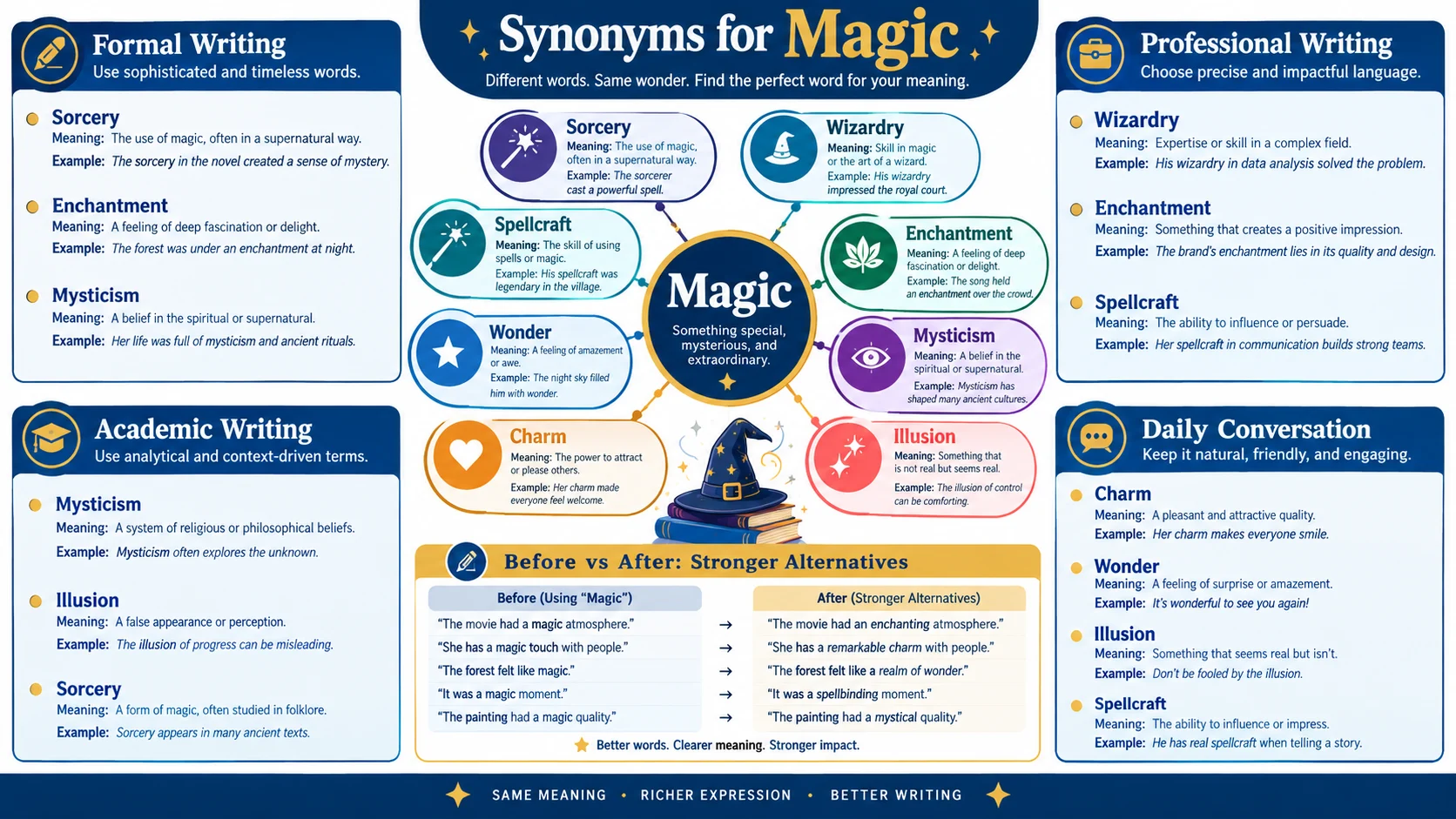
What is another word for magic? Depending on the context, common alternatives include sorcery, wizardry, enchantment, illusion, mysticism, charm, spellcraft, and wonder. The best synonym depends on whether you’re describing supernatural powers, stage tricks, fascination, or a special feeling that seems extraordinary.
What Does Magic Mean?
Definition
The word magic generally refers to the use of supernatural powers, mysterious forces, or techniques believed to influence events beyond natural explanation. It can also describe stage illusions, extraordinary skill, or a special quality that creates amazement and wonder.
Common Uses
Magic is commonly used in several different ways:
- Supernatural powers in fantasy stories
- Religious or mystical practices
- Stage performances and illusions
- A feeling of wonder or amazement
- Extraordinary talent or effectiveness
Examples:
- The wizard used magic to open the hidden door.
- The magician’s magic amazed the audience.
- Their first meeting had a certain magic about it.
Best Synonyms for Magic
| Synonym | Meaning | Best Used When | Example |
|---|---|---|---|
| Sorcery | Supernatural magical power | Fantasy and mythology | The sorcerer practiced ancient sorcery. |
| Wizardry | Skillful or magical practice | Fantasy or exceptional skill | His coding wizardry solved the issue quickly. |
| Enchantment | A magical spell or charm | Fairy tales and literature | The castle remained under enchantment. |
| Mysticism | Spiritual mystery and hidden knowledge | Religious and philosophical contexts | She studied mysticism for years. |
| Illusion | A deceptive appearance or trick | Stage performances | The illusion fooled the audience. |
| Spellcraft | The art of casting spells | Fantasy writing | The witch mastered spellcraft. |
| Charm | Magical attraction or appeal | Personal appeal or magic | The village had undeniable charm. |
| Wonder | Awe and amazement | Emotional or descriptive writing | Children viewed the world with wonder. |
| Alchemy | Transformative mystical practice | Historical or symbolic contexts | Ancient alchemy fascinated scholars. |
| Witchcraft | Magical practices traditionally associated with witches | Folklore and fantasy | The story centers on witchcraft. |
Synonyms by Context
Formal Writing
When writing formally, direct references to supernatural magic may not fit the tone. Consider:
- Mysticism
- Enchantment
- Fascination
- Wonder
- Phenomenon
Example:
Instead of:
“The event had magic.”
Use:
“The event inspired a sense of wonder.”
Professional Writing
Professional settings often use figurative alternatives.
Good choices include:
- Innovation
- Expertise
- Excellence
- Skill
- Mastery
Example:
“The team’s marketing magic increased sales.”
Professional version:
“The team’s expertise significantly increased sales.”
Academic Writing
Academic writing typically avoids the word magic unless discussing literature, anthropology, or religion.
Better alternatives include:
- Mysticism
- Ritual practice
- Symbolism
- Supernatural belief
- Cultural tradition
Example:
“The study examined magical beliefs.”
Alternative:
“The study examined supernatural belief systems.”
Daily Conversation
Common conversational replacements include:
- Wonder
- Charm
- Spark
- Excitement
- Special quality
Example:
“The vacation was pure magic.”
Alternative:
“The vacation was absolutely wonderful.”
Professional Alternatives for Magic
In business communication, “magic” is often used metaphorically. More professional alternatives include:
Mastery
Meaning: Exceptional skill gained through experience.
Business Example:
Her mastery of negotiations helped secure the contract.
Expertise
Meaning: Specialized knowledge and competence.
Business Example:
The consultant’s expertise improved operational efficiency.
Innovation
Meaning: Creative and effective new ideas.
Business Example:
The company’s innovation transformed the market.
Excellence
Meaning: Outstanding quality or performance.
Business Example:
Their excellence earned industry recognition.
Skill
Meaning: Learned ability and competence.
Business Example:
His technical skill impressed the leadership team.
Simple Alternatives for Magic
If you’re looking for everyday words that are easy to understand, these options work well.
Wonder
A feeling of amazement.
Daily Example:
The fireworks filled everyone with wonder.
Charm
A pleasant and attractive quality.
Daily Example:
The small town had a unique charm.
Spark
A special energy or excitement.
Daily Example:
The performance had real spark.
Excitement
A feeling of enthusiasm and anticipation.
Daily Example:
There was excitement throughout the stadium.
Delight
Great pleasure and happiness.
Daily Example:
The surprise brought delight to the children.
Stronger Alternatives for Magic
Some situations call for more vivid or powerful language.
Sorcery
Meaning: Powerful supernatural magic.
Best Used For: Fantasy novels and mythology.
Tone: Dramatic
Difficulty: Medium
Usage Frequency: Common
Best For: Creative writing and storytelling
Business Example:
The software team’s sorcery-like problem solving impressed management.
Academic Example:
The novel explores themes of sorcery and power.
Daily Example:
The movie featured ancient sorcery.
Wizardry
Meaning: Extraordinary skill or magical ability.
Best Used For: Exceptional talent.
Tone: Positive
Difficulty: Medium
Usage Frequency: Common
Best For: Professional and creative contexts
Business Example:
Her financial wizardry saved the company money.
Academic Example:
The paper examines technological wizardry in modern media.
Daily Example:
His computer wizardry fixed the issue instantly.
Enchantment
Meaning: A magical state or captivating effect.
Best Used For: Literature and descriptive writing.
Tone: Elegant
Difficulty: Advanced
Usage Frequency: Common
Best For: Essays and creative content
Business Example:
The brand’s storytelling creates a sense of enchantment.
Academic Example:
The novel relies heavily on themes of enchantment.
Daily Example:
The garden seemed filled with enchantment.
Difference Between Similar Synonyms
Many synonyms for magic appear similar but have important differences.
Magic vs Sorcery
- Magic is a broad term.
- Sorcery specifically refers to supernatural powers and spellcasting.
Example:
Magic:
“The wizard used magic.”
Sorcery:
“The wizard practiced forbidden sorcery.”
Magic vs Illusion
- Magic may imply supernatural power.
- Illusion refers to tricks or deception.
Example:
Magic:
“The audience believed in the magic.”
Illusion:
“The illusion relied on hidden mechanisms.”
Magic vs Wonder
- Magic often suggests a mysterious cause.
- Wonder focuses on the emotional reaction.
Example:
Magic:
“The performance felt magical.”
Wonder:
“The performance inspired wonder.”
Magic vs Charm
- Magic suggests supernatural influence.
- Charm emphasizes attractiveness and appeal.
Example:
Magic:
“The spell worked instantly.”
Charm:
“The café’s charm attracted visitors.”
Opposite Words
The opposite of magic depends on the context.
Common antonyms include:
| Opposite Word | Meaning |
|---|---|
| Reality | Actual existence without supernatural elements |
| Science | Knowledge based on evidence and observation |
| Logic | Reasoning and rational thought |
| Ordinary | Lacking special or extraordinary qualities |
| Normality | Typical or expected conditions |
| Fact | Something proven to be true |
Examples:
- Magic creates mystery, while logic seeks explanation.
- Magic suggests wonder, while ordinary describes the everyday.
FAQs
What is another word for magic?
Popular alternatives include sorcery, wizardry, enchantment, illusion, mysticism, charm, and wonder.
What is a formal synonym for magic?
Formal options include mysticism, enchantment, fascination, and supernatural influence depending on the context.
What is a professional alternative for magic?
In business writing, use expertise, mastery, innovation, excellence, or skill.
What word can replace magic in an essay?
Good essay alternatives include wonder, enchantment, mysticism, fascination, or supernatural power.
Is wizardry the same as magic?
Not exactly. Wizardry is a type of magic and can also refer to exceptional skill or expertise.
What is a literary synonym for magic?
Literary alternatives include enchantment, spellcraft, sorcery, mysticism, and alchemy.
What is a positive synonym for magic?
Positive options include wonder, charm, delight, enchantment, and marvel.
What is a fantasy synonym for magic?
Fantasy writing often uses sorcery, spellcraft, wizardry, witchcraft, and arcana.
Can magic mean skill?
Yes. In informal language, magic often describes remarkable skill or effectiveness.
What is the strongest synonym for magic?
For supernatural contexts, sorcery and wizardry are among the strongest alternatives.
Conclusion
The best synonym for magic depends entirely on the context. If you’re discussing supernatural powers, words like sorcery, wizardry, and spellcraft are strong choices. For writing about fascination or beauty, enchantment, wonder, and charm often work better. In professional settings, alternatives such as expertise, mastery, and innovation provide clearer and more appropriate wording. Choosing the right synonym helps make your writing more precise, engaging, and effective.