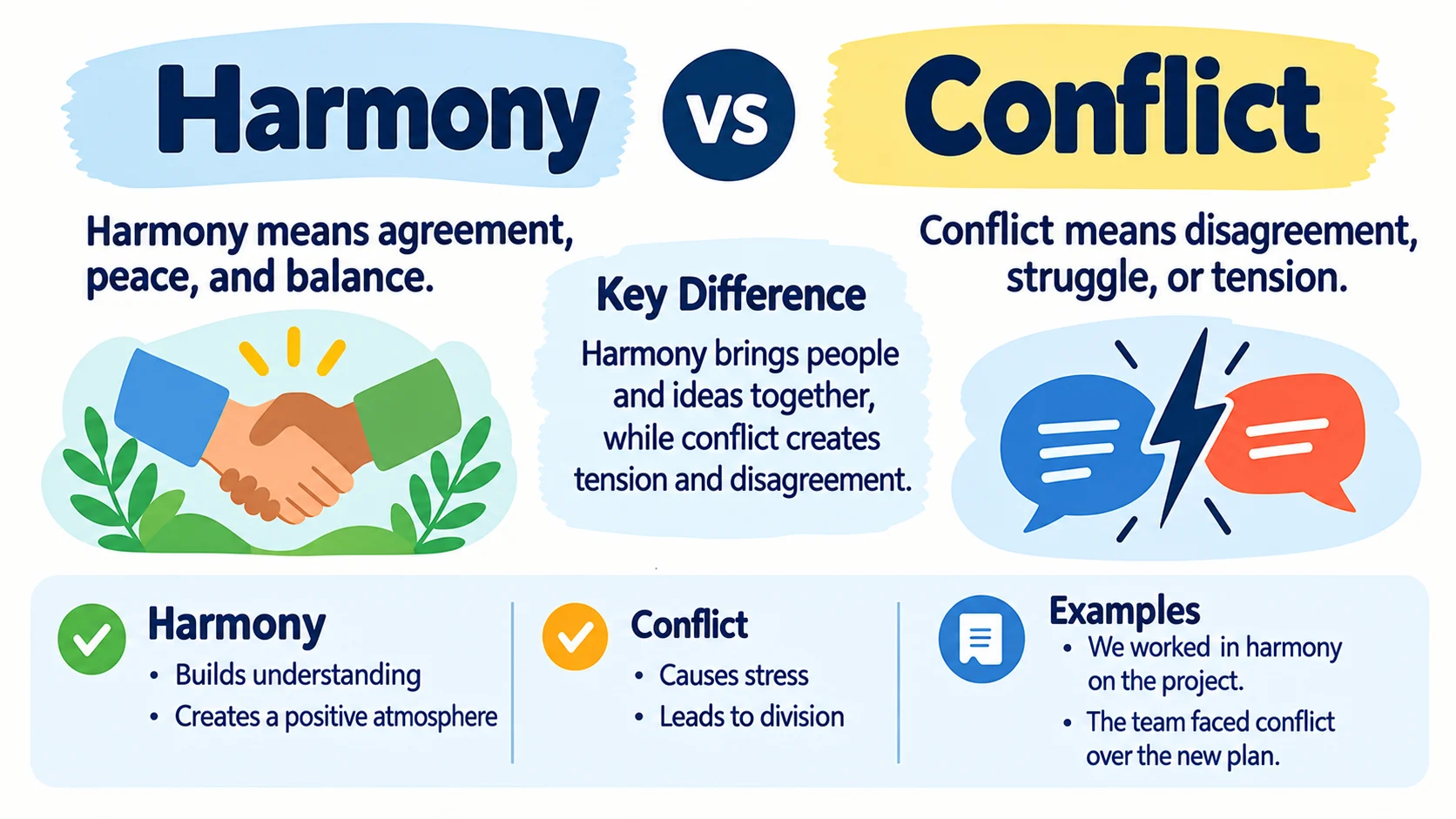
The strongest antonym of harmony is discord when harmony means agreement, peaceful relations, or a pleasing combination. Other opposites include conflict, disharmony, and disagreement, depending on context. Harmony can describe relationships, groups, sounds, or ideas, so the most accurate opposite depends on what is being described.
- Part of Speech: Noun
- Primary Opposite: Discord
- Definition of Harmony: A state of agreement, peaceful cooperation, or pleasing combination among people, sounds, ideas, or elements.
- Why Discord Fits: Discord describes a lack of agreement or a clash between people, opinions, or sounds. It directly contrasts with the unity and compatibility expressed by harmony.
For example, a family living in harmony cooperates and maintains peaceful relationships. A family experiencing discord faces tension, disagreements, or strained relationships.
Although discord is a strong general antonym, conflict may be more suitable when describing active disputes, while disharmony emphasizes a lack of balance or compatibility.
Direct and Strong Antonyms
The following words represent genuine opposites of harmony in appropriate contexts. Their meanings overlap, but each emphasizes a different kind of disagreement or incompatibility.
| Antonym | Tone or Nuance | Example Sentence |
|---|---|---|
| Discord | Strong, direct, and often formal | Growing discord among the partners threatened the business. |
| Disharmony | Lack of balance or agreement | The sudden policy change created disharmony within the department. |
| Conflict | Active disagreement or opposing interests | The neighbors experienced conflict over the property line. |
| Disagreement | Difference in opinions or beliefs | Their disagreement over the budget lasted several hours. |
| Strife | Prolonged or bitter conflict | Years of political strife divided the community. |
| Dissonance | Clashing sounds or incompatible elements | The dissonance between the instruments changed the mood of the song. |
Discord is the strongest general choice because it can describe interpersonal tension, social divisions, and unpleasant combinations of sounds. Disharmony is especially useful when you want to emphasize a lack of balance rather than an active argument.
Contextual and Subtle Opposites
Harmony has several meanings, so its best antonym changes with the situation. Choosing a word that matches the intended meaning makes your writing more accurate.
| Context | Best Opposite | Why It Fits |
|---|---|---|
| Family relationships | Discord | Highlights tension and strained relationships. |
| Workplace cooperation | Conflict | Describes opposing goals or active disputes. |
| Music and sound | Dissonance | Refers to sounds that clash or lack pleasing compatibility. |
| Group opinions | Disagreement | Emphasizes differences in views. |
| Social or political conditions | Strife | Suggests serious or prolonged divisions. |
| Design and visual balance | Disharmony | Describes elements that do not work well together. |
Harmony in Relationships
When harmony describes peaceful relationships, discord and conflict are particularly effective opposites.
Example: “The siblings lived in harmony until they disagreed about their parents’ estate.”
Opposite: “The siblings experienced discord after the disagreement about their parents’ estate.”
Here, discord captures the deterioration of their relationship without suggesting that every disagreement must become an argument.
Harmony in Music
In music, harmony refers to notes played or sung together in a pleasing or structurally compatible way. Dissonance is the more precise opposite when the focus is on clashing or tense musical sounds.
Example: “The choir produced beautiful harmony during the final song.”
Opposite: “The unexpected dissonance created tension in the final passage.”
Dissonance does not always mean that music is poorly performed. Musicians can use it intentionally to create suspense or emotional depth.
Harmony in the Workplace
In professional settings, harmony often means cooperation, mutual understanding, and the ability to work toward shared goals.
Example: “The new manager encouraged harmony between the sales and marketing teams.”
Opposite: “Ongoing conflict between the departments delayed the project.”
In this case, conflict is more natural than dissonance because the issue involves people, responsibilities, and competing priorities.
Words That Seem Opposite But Are Not
Common Grammatical or Semantic Confusions
Chaos is sometimes listed as an opposite of harmony. However, chaos means complete disorder or confusion, not necessarily disagreement. A chaotic office might have misplaced documents and disorganized schedules even when every employee gets along.
Example: “The office was chaotic during the move, but the team remained in harmony.”
Silence is another word that can seem opposite to harmony, especially when harmony refers to music or conversation. Yet silence means an absence of sound, not a lack of agreement.
Example: “The room fell silent after the announcement, but everyone remained on friendly terms.”
These words may contrast with harmony in particular situations, but they are not reliable direct antonyms across its main meanings.
Subtle Tone Differences
Although discord, conflict, and disagreement can all oppose harmony, they communicate different levels and types of tension.
- Discord suggests a lack of agreement or a strained relationship. It works well in formal writing and general descriptions.
- Conflict emphasizes competing interests, goals, or positions. It can describe anything from a workplace dispute to a serious international confrontation.
- Disagreement is usually more neutral. People can disagree respectfully while maintaining harmony.
- Strife carries a stronger, more serious tone and often suggests prolonged hostility.
- Dissonance is especially appropriate for music and situations involving clashing elements or ideas.
Consider these sentences:
- “The committee had a disagreement about the schedule.”
- “The committee experienced conflict over its responsibilities.”
- “The dispute created discord among committee members.”
Each sentence describes tension, but the emphasis changes. A disagreement can be minor, conflict suggests opposing interests, and discord highlights the resulting lack of unity.
Frequently Asked Questions
What is the direct antonym of harmony?
Discord is a strong direct antonym of harmony because it describes disagreement, tension, or a lack of compatibility. For music, dissonance may be more precise, while conflict is often preferable when describing active disputes between people or groups.
What is the opposite of harmony in relationships?
In relationships, discord is usually the best opposite of harmony. It describes tension, strained interactions, and a lack of agreement. Conflict is another suitable choice when people actively argue or have opposing interests. A simple disagreement does not necessarily destroy harmony.
Can I use conflict instead of discord in professional writing?
Yes. Use conflict when you mean an active dispute, competing priorities, or opposing interests. Choose discord when emphasizing strained relationships or a general lack of agreement. For example, a report might describe conflict between departments or discord within a leadership team.
Practical Word Choice
1. Identify the intended meaning. Determine whether harmony refers to relationships, musical sounds, shared opinions, or balance before selecting an antonym.
2. Match the tone and context. Use discord for general tension, conflict for opposing interests, dissonance for clashing sounds, and disagreement for differences of opinion.
Final Thoughts
The strongest general antonym of harmony is discord, but the most accurate opposite depends on the situation. Conflict, disharmony, disagreement, strife, and dissonance each describe a different form of incompatibility or tension.
Understanding these distinctions helps you choose words that express exactly what you mean. A disagreement does not always create discord, and musical dissonance does not necessarily indicate poor performance. Context determines which opposite communicates your idea most clearly.
When writing, consider whether you want to emphasize a lack of agreement, active opposition, or an unpleasant combination. Which sentence would you use to describe the opposite of harmony in your own experience?